
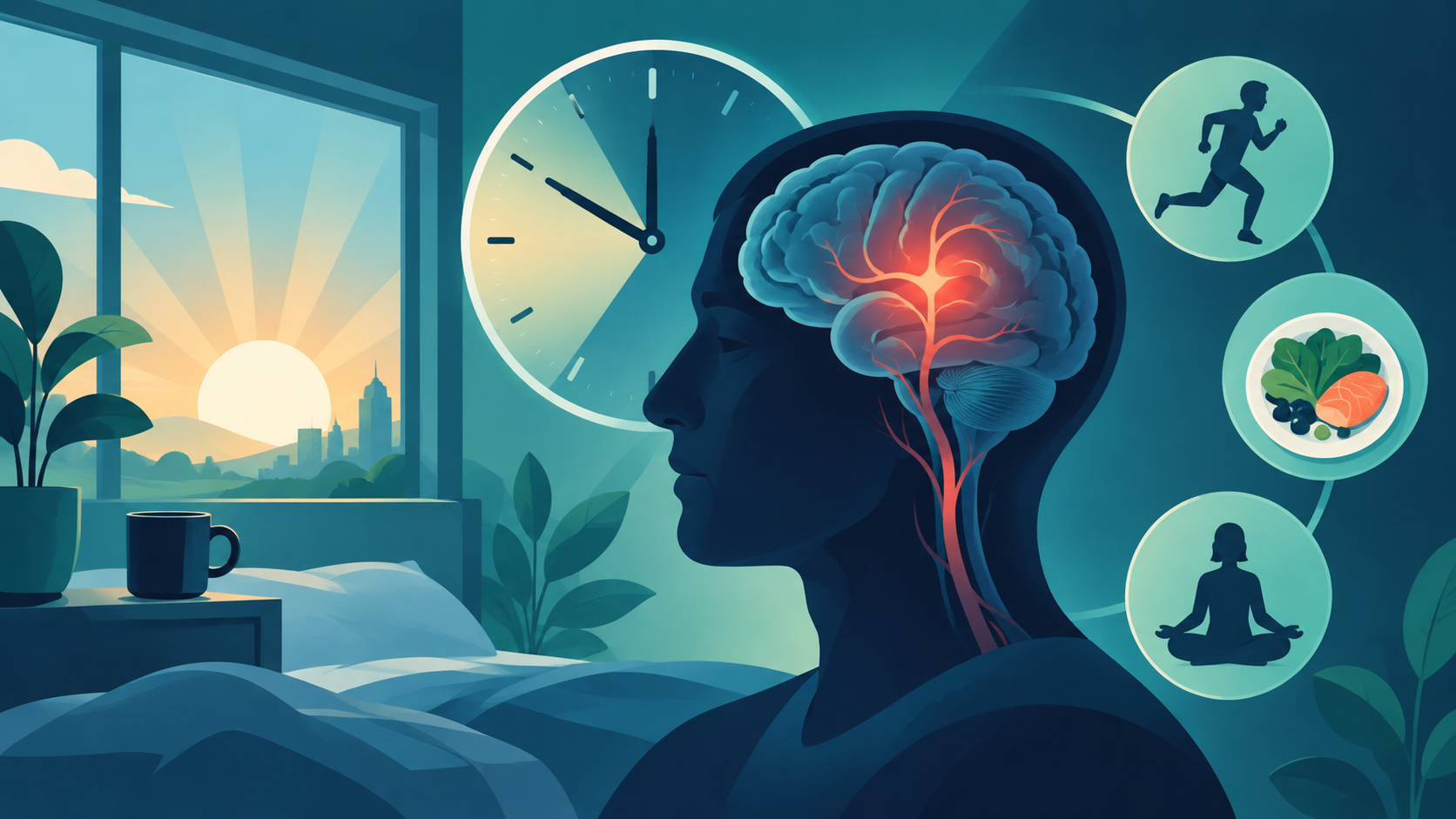
New Study: Your Stroke Risk Is 72% Higher Between 6 and 9 AM — Here's What to Do About It
A sweeping new meta-analysis of nearly 12,000 adult stroke patients has confirmed what cardiologists have long suspected: the hours between 6 a.m. and 9 a.m. are the most dangerous of the day for your brain. Published November 9, 2026, and reported by The Washington Post, the study found that people are 72% more likely to suffer a stroke during that three-hour morning window than at any other time of day — a finding with immediate, practical implications for how you start your morning.
What the Research Found
The meta-analysis pooled data from multiple large-scale studies covering nearly 12,000 adult stroke patients across different stroke subtypes — ischemic strokes (caused by clots), hemorrhagic strokes (caused by bleeding), and transient ischemic attacks (TIAs, or "mini-strokes"). Across all three types, the morning hours emerged as the peak danger zone.
Heart attacks follow a similar pattern: a separate body of research shows a 40% increased likelihood of a heart attack occurring during the 6 a.m. hour specifically. The convergence of these findings points to a clear biological mechanism — one that every adult should understand.
Why Mornings Are Riskier: The Biology Behind the Spike
The morning surge in cardiovascular and cerebrovascular risk isn't random — it's driven by your body's own circadian rhythms. As you transition from sleep to wakefulness, several physiological changes happen simultaneously:
Blood pressure rises sharply — sometimes called the "morning blood pressure surge"
Platelets become stickier and more prone to clotting, increasing ischemic stroke risk
Cortisol and adrenaline levels spike, placing extra demand on the heart and blood vessels
The sympathetic nervous system activates, raising heart rate and vascular resistance
Together, these changes create a perfect storm for cardiovascular events — particularly in people who already have underlying risk factors such as high blood pressure, high cholesterol, obesity, or a sedentary lifestyle.
Who Is Most at Risk?
While the morning spike affects everyone to some degree, certain groups face a significantly elevated risk:
People with hypertension — uncontrolled high blood pressure amplifies the morning surge dramatically
Adults over 55 — age-related stiffening of arteries makes the morning pressure spike harder to absorb
People with sleep apnea — repeated oxygen drops overnight prime the cardiovascular system for stress
Those who wake abruptly to loud alarms — sudden arousal from deep sleep can trigger a sharper blood pressure spike
Smokers and heavy coffee drinkers — nicotine and high caffeine intake in the first hour of waking can compound vascular stress
Researchers also note that strokes occurring during sleep or in the early morning hours are often more severe, partly because symptoms go unnoticed longer before emergency care is sought.
Practical Steps to Reduce Your Morning Risk
The good news: the morning risk window is not inevitable. Cardiologists and neurologists point to several evidence-backed habits that can meaningfully blunt the morning cardiovascular surge. These are not dramatic lifestyle overhauls — they are small, consistent changes that add up over time.
Hydrate immediately upon waking. Blood is naturally more viscous (thicker) in the morning after hours without fluids. Drinking 8–16 oz of water within the first 15 minutes of waking helps thin the blood and supports healthy circulation. Use our Water Intake Calculator to find your personalized daily hydration target.
Rise slowly. Avoid jumping out of bed immediately. Sit on the edge of the bed for 30–60 seconds before standing to allow blood pressure to adjust gradually.
Take blood pressure medication in the morning if prescribed. If your doctor has prescribed antihypertensives, taking them in the morning (unless directed otherwise) can help blunt the morning surge. Always follow your clinician's guidance.
Avoid intense exercise in the first 30 minutes. Light stretching or a gentle walk is fine, but high-intensity workouts immediately after waking can spike blood pressure further in at-risk individuals.
Limit caffeine in the first hour. If you're a coffee drinker, consider waiting 60–90 minutes after waking before your first cup — a practice some cardiologists recommend to avoid compounding the cortisol spike.
Know the warning signs. FAST: Face drooping, Arm weakness, Speech difficulty, Time to call 911. Morning is when you most need to recognize these signs quickly.
The Role of Overall Health in Reducing Risk
The morning spike is a trigger — but underlying health status determines how dangerous that trigger is. Maintaining a healthy weight, managing blood pressure, staying physically active, and not smoking are the most powerful long-term defenses against stroke. If you're unsure where you stand, tools like our BMI Calculator and TDEE Calculator can help you understand your baseline and set realistic health goals.
A 2026 review published in Frontiers in Cardiovascular Medicine found that people with high cardiovascular health scores — based on the American Heart Association's "Life's Essential 8" metrics — gained approximately 8.9 additional years of life expectancy at age 50 compared to those with low scores. The morning risk window is one piece of a much larger picture, but it's a piece you can act on starting tomorrow.
Why It Matters
Stroke is the fifth leading cause of death in the United States and a leading cause of long-term disability. The fact that risk peaks in a predictable, three-hour window every single morning means there is a concrete opportunity to intervene — through medication timing, hydration, gentle waking routines, and awareness of warning signs. This research doesn't require a prescription or a gym membership. It requires knowing when your body is most vulnerable and adjusting your morning accordingly.
Talk to your doctor if you have hypertension, a family history of stroke, or other cardiovascular risk factors. Ask specifically about morning blood pressure patterns and whether your current medication timing is optimized for the morning surge. Small adjustments, made consistently, can make a meaningful difference.
Sources
The Washington Post — "Your stroke risk is 72 percent higher during these 3 hours of the day" (November 9, 2026): washingtonpost.com
Frontiers in Cardiovascular Medicine — "Life's Essential 8 and Longevity" (October 2026): frontiersin.org
PMC / National Library of Medicine — Circadian variation in stroke risk meta-analysis (December 2025): pmc.ncbi.nlm.nih.gov
Before you act on this
This article is for general educational purposes only. Everyone’s situation is different, so before making any decisions please refer to a qualified professional who can advise you based on your specific circumstances.